
Wild or farmed? A short guide to what’s on your plate and why it matters.
Not all salmon is raised the same way. From where it lives to what it eats, the difference between wild-caught and farmed salmon goes beyond the label. Here’s what to know and why we choose to serve wild-caught.
Where It Lives Matters
Wild salmon grow in their natural environments, moving through rivers and open waters and feeding on a natural diet. Farmed salmon are raised in controlled environments, typically in ocean pens or land-based systems, and fed a prepared diet.
These differences in environment and diet can influence the salmon’s flavor, texture, and nutritional profile.
What Makes Wild Salmon Different?
Wild-caught salmon is a source of high-quality protein, omega-3 fatty acids, and essential nutrients like vitamin D. Omega-3s, including EPA and DHA, play important roles in heart and brain health.
Its nutritional profile, flavor, and texture can differ from farmed salmon depending on the species, diet, and growing conditions. For many, wild salmon stands out for its distinct flavor and natural texture.
Why We Choose Wild-Caught
At Aubergine, we believe better food starts with thoughtful choices. We choose wild-caught salmon for its flavor, ingredient quality, and alignment with our sourcing standards.
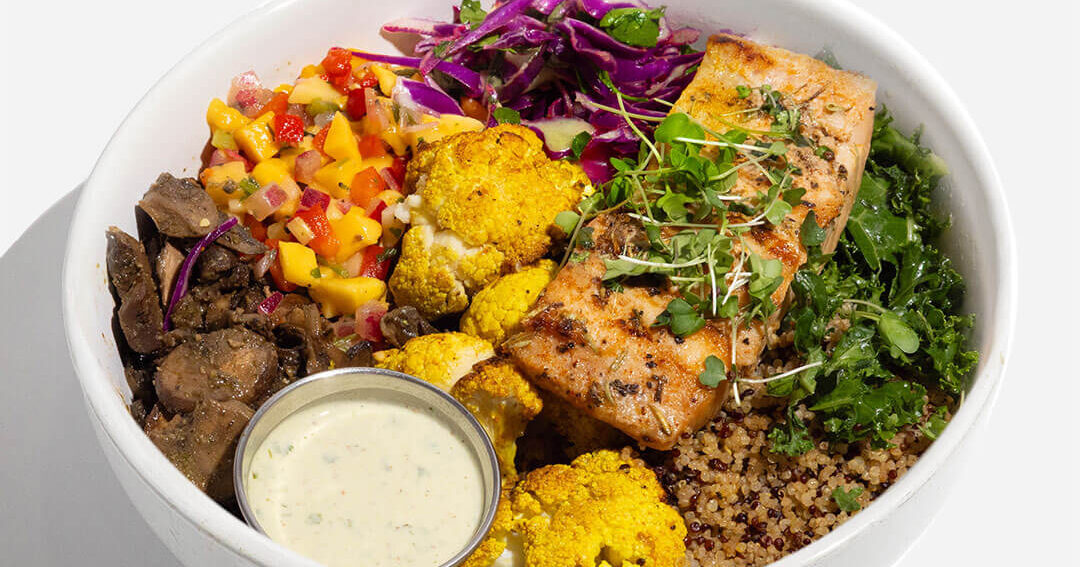
Our Wild Salmon Plate brings together wild-caught salmon, fresh vegetables, and whole grains for a meal made with real ingredients and prepared with care.
It’s one more way we put intention behind what we serve, because we believe you should feel good about what’s on your plate.
0 Comments